
HiZone: Meet. Chat. Dating
Meta Zone Technology LimitedSocial
4.32.38K Reviews
- Version
- 1.4.9
- Installs
- 500.00K
- Age Rating
- Mature 17+
Screenshots
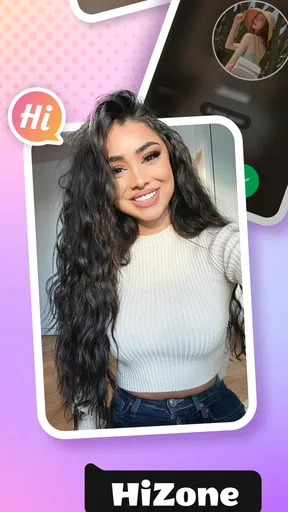
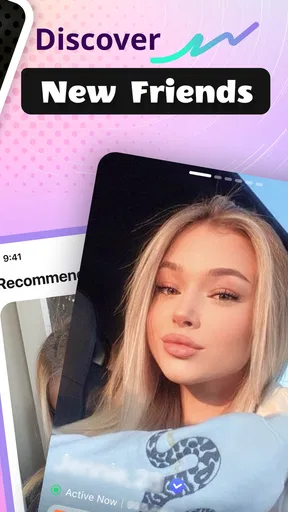


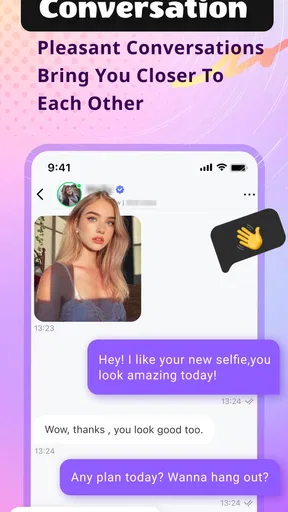
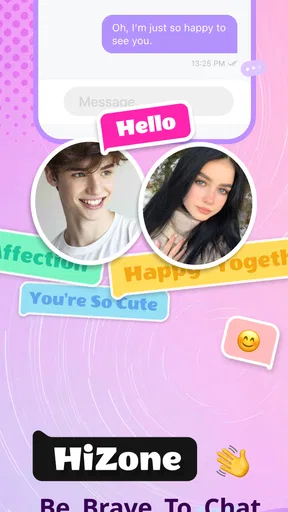
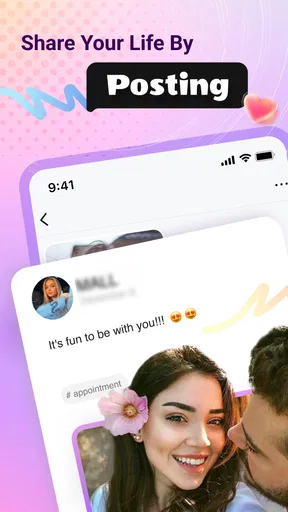

Our Review of HiZone: Meet. Chat. Dating
 Analysis by Appyee
I spent time with HiZone: Meet. Chat. Dating. as a social dating app, and my overall impression is that it tries to make online dating feel less like filling out a rigid form and more like presenting yourself in your own way. That sounds simple, but it changes how I approached the app: instead of treating every profile as a checklist, I paid more attention to how people express their personality and what kind of conversation they seem ready to have.
HiZone is free to download and use, although it includes optional purchases ranging from under a dollar to several hundred dollars per item. It is aimed at mature users, with a 17-plus content rating, so I would not treat it as a casual social network for younger teenagers. The app comes from Meta Zone Technology Limited and sits in a crowded dating market, but its appeal is clearest for people who dislike being pushed into one narrow dating style.
How HiZone feels in everyday use
The first thing I noticed is that the app’s central idea is flexibility. It presents itself as a place where you can choose how you want to date, and that is more useful than it may sound. Some people want a serious relationship, some want to meet new people slowly, and others simply want conversation before deciding whether there is chemistry. A dating app works better when it gives users room to communicate that difference rather than forcing every interaction into the same pattern.
In practice, I found that the quality of the experience depends heavily on how clearly you describe yourself. A short profile may be quick to create, but it gives potential matches very little to respond to. I would use the profile space to explain the kind of conversation I enjoy, the pace I prefer, and what I am actually hoping to find. That approach makes the app more personal and also filters out people whose expectations do not match mine.
One realistic use case is an evening when I have only a few minutes to spare. I can browse, notice which profiles offer something specific to discuss, and start with a message connected to that detail instead of sending a vague greeting. On a different day, I might prefer a longer conversation and be more selective. HiZone makes more sense for that flexible routine than for someone who wants a strictly structured matching process with every decision reduced to a swipe.
The social side is important here. Dating apps often become tiring when every profile looks polished but says very little. I found that the better interactions came from treating the app as a conversation tool rather than a catalogue of faces. A useful habit is to look for one concrete interest, opinion, or personal detail and ask about that. It takes slightly more effort, but it gives the other person a natural way to answer.
Who is likely to get the most from it
I think HiZone is best suited to adults who want to control the tone and pace of their dating experience. It can work well for someone returning to dating after a break, especially if that person does not want to commit immediately to one definition of a relationship. It may also appeal to users who feel that large mainstream dating services are too repetitive or too focused on rapid decisions.
It is less suitable for anyone who wants a highly formal matchmaking service built around detailed compatibility testing, extensive relationship coaching, or a clearly defined niche community. If your priority is a very specific dating identity or a tightly moderated environment centered on one lifestyle, a specialized alternative may be a better fit. HiZone’s broader social positioning gives it room to welcome different intentions, but that same openness can make the experience feel less focused.
I would also avoid approaching it with the expectation that a free app automatically means a completely unrestricted experience. Optional purchases are part of the product model, and the highest listed purchase tier is substantial. I would begin with the free experience, learn whether conversations and discovery suit me, and only then consider whether any paid option genuinely improves my use. Spending before understanding the app’s rhythm would be an unnecessary risk.
Small habits that improve the experience
My first practical recommendation is to write for the person you hope will contact you, not for an imaginary audience. A profile that tries to appeal to everyone usually gives nobody a good opening line. I would choose two or three details that show personality and add one sentence about the kind of connection I want. This is more effective than listing broad labels without context.
My second recommendation is to separate curiosity from compatibility. Someone can be interesting to talk to without being a good dating match, and that distinction helps prevent rushed decisions. I would use early chat to check whether the other person respects boundaries, responds thoughtfully, and understands the pace I have described. That is a more reliable signal than assuming a promising profile guarantees a good connection.
A third useful tactic is to review the profile from a stranger’s point of view before becoming active. If the photos, wording, and stated intentions suggest different things, people may misunderstand what I want. Consistency matters because the app gives users freedom in how they present themselves; that freedom works best when the message is clear. I would also avoid sharing sensitive personal details early, even when a conversation feels comfortable.
Finally, I would treat moving from chat to an in-person meeting as a separate decision rather than the automatic next step. A short public meeting, with someone I trust aware of the plan, is a sensible way to test real-world chemistry. No dating app can replace judgment, and HiZone’s open social character makes personal boundaries especially important.
What the current version says about the product’s direction
The current version is 1.4.9, and that gives the app a more established feel than a brand-new experiment. HiZone was released in October 2022, so it has had time to develop beyond its initial launch. I see that history as useful context: the app is not presenting itself as a temporary novelty, but as a service that has been maintained through multiple stages of its life.
There is a difference, though, between knowing an app has reached a particular version and knowing exactly how every update changed the experience. I would not assume that a newer version automatically means the app has solved every common dating-app problem. What I can say is that the current release is the version users should evaluate today, while the release history suggests an ongoing product rather than a one-off launch.
That distinction matters for existing users. Someone who joined earlier may notice changes in layout, account behavior, or the way discovery and communication feel after updating. I would give the current version a fair trial before judging it through memories of an older build. At the same time, long-time users should pay attention to whether their preferred routines still feel straightforward, particularly if they rely on a familiar way of presenting themselves or starting conversations.
The app has an average rating of about 4.3 from roughly sixteen thousand ratings, with around two and a half thousand written reviews. Those figures suggest that many people find enough value to rate it positively, while the written feedback is large enough to show that experiences will vary. I would read the overall score as encouragement to try it, not as proof that it will suit every dating style.
Its reach is also meaningful: HiZone has passed half a million installs. That gives a new user a reasonable sense that the service has an active public presence, but reach alone does not tell me whether the people nearby are compatible or responsive. Dating apps are local and personal in a way that download totals cannot capture. I would judge the app by the quality of conversations available to me, not by its install figure.
How it compares with familiar dating options
Compared with a traditional swipe-first dating app, HiZone feels more appealing to users who want identity and intention to matter before rapid matching. Swipe-based services can be efficient, but they can also encourage snap judgments based on limited information. HiZone’s social framing leaves more room for self-expression, which I consider a strength when I am tired of making decisions from photos alone.
Compared with a niche dating service, however, it may feel less precise. A specialized app can make it easier to find people who share a particular belief, lifestyle, age group, or relationship goal because the whole community is organized around that focus. HiZone’s broader approach is more welcoming for people who are still deciding what they want, but users with a very specific requirement may spend more time filtering conversations themselves.
Compared with a general social network, HiZone has a clearer dating purpose. That can make intentions easier to understand, but it also means users should be more direct and careful about boundaries. On a general platform, a conversation may remain casual without any expectation. In a dating environment, even a friendly exchange can be interpreted differently, so I would communicate clearly rather than relying on hints.
That balance is the app’s main trade-off. Its flexibility is valuable when I want choice, but choice also creates responsibility. I need to explain what I mean, notice whether the other person understands it, and leave conversations that become uncomfortable. A more structured competitor may do more of that filtering for me; HiZone gives me more control but asks me to use it thoughtfully.
What existing users should keep in mind
If I were already using HiZone, I would update to the current version and then check the parts of the experience I use most often rather than assuming everything is unchanged. I would review my profile wording, revisit my preferences, and see whether my usual way of finding and talking to people still feels natural. This is not about chasing every new option; it is about making sure the app still represents what I want now.
I would also be careful with optional spending. Because the app is free but offers purchases, it is easy to confuse a moment of frustration with a genuine need for an upgrade or paid item. I would first improve the parts I control: profile clarity, photo selection, message quality, and patience. If those basics are weak, paying more is unlikely to fix the underlying problem.
For users who have built conversations over time, continuity and trust are more important than novelty. I would avoid moving too quickly just because a new interaction feels exciting. The app can introduce people, but it cannot verify character for me. Keeping early communication inside the app until I feel comfortable is a sensible precaution, and I would never let pressure from another user decide my pace.
Where the experience still has limits
The biggest limitation is not necessarily a missing button or a technical issue; it is the uncertainty that comes with a broad dating community. When people can choose how they want to date, they may arrive with very different expectations. That freedom can create better matches for open-minded users, but it can also produce misunderstandings when two people use similar words to mean different things.
Another limitation is that profile quality remains uneven. No design can force every user to be interesting, honest, or responsive. HiZone can provide the setting for a better introduction, but I still have to decide whether someone has made a genuine effort. If I want a service that gives me more structured compatibility guidance, I may prefer a competitor that does more sorting before conversation begins.
The mature rating also deserves practical attention. I would not recommend treating this as an all-ages messaging space, and parents should not assume that a dating label makes an app appropriate for younger users. Adults should still use ordinary online safety habits, especially when conversations turn personal or when someone asks for money, private documents, or unusually sensitive information.
There is also a possible mismatch between the app’s welcoming social tone and the needs of users who want immediate certainty. HiZone may be enjoyable if I am willing to explore and communicate, but frustrating if I expect a guaranteed path from profile to relationship. Dating remains unpredictable, and the app’s flexibility does not remove that reality.
What I would watch before committing more time or money
I would watch how consistently people state their intentions and how easy it is to act on those intentions without confusion. A good future direction for any app like this would be making personal choice feel clearer, not simply adding more ways to browse. I would pay attention to whether the current experience helps users express boundaries and relationship goals in language that others can understand.
I would also watch the balance between free access and optional purchases. Since the app is free to start, the important question is whether a normal user can explore it comfortably before paying. I would not judge purchases by their existence alone; I would judge whether they feel transparent, optional, and relevant to a user who is still learning how the service works.
For existing users, I would monitor whether updates preserve the relaxed, personal character that makes the app different from a purely mechanical matching tool. Product evolution is useful when it removes friction without making every interaction feel like a competition. If future changes make conversations easier to begin while keeping user control intact, that would strengthen HiZone’s position.
For new users, I would watch the first week rather than making a decision after one session. Try different profile wording, notice which kinds of messages receive thoughtful replies, and keep track of whether the people you meet respect the dating pace you describe. That short experiment will tell you more than a rating alone because it reflects your location, preferences, and communication style.
My final view is favorable but measured. HiZone is a free social dating app for mature users who want room to define their own approach instead of being pushed into one standard dating script. I like the emphasis on self-expression and flexibility, and I think it can be a good match for people who value conversation over instant judgments. I would skip it if I wanted highly specialized matchmaking, strict structure, or a service that makes most compatibility decisions for me.
The best way to use it is to start slowly, write an honest profile, keep expectations clear, and avoid paying until the free experience has earned your confidence. With that mindset, the app feels less like a promise of effortless romance and more like what a dating service can realistically provide: a place to meet people, begin conversations, and decide carefully what deserves to continue.
Verdict
Strengths of HiZone: Meet. Chat. Dating
- Simple interface makes browsing profiles quick and easy.
- Supports private conversations for getting to know matches better.
- Useful discovery tools help find people with similar interests.
- Profile customization lets users show more of their personality.
- Convenient for meeting new people beyond your local social circle.
Limitations of HiZone: Meet. Chat. Dating
- Some features may require a paid subscription or in-app purchases.
- Match quality depends heavily on the number of active local users.
- Dating apps can expose users to inactive or incomplete profiles.
- Privacy settings should be reviewed carefully before sharing personal details.
- The experience may include ads or promotional content between actions.
Similar Picks in This Category
View All
Meta Platforms, Inc.4.6

Instagram4.0

Likee-Live, Chat & Party Games
Likeme Pte. Ltd.4.4

Facebook Lite
Meta Platforms, Inc.4.5

TikTok - Videos, Shop & LIVE
TikTok Pte. Ltd.4.0

Moj: Free Short Drama & Reels
ShareChat4.1
Frequently Asked Questions
What is HiZone: Meet. Chat. Dating used for?
HiZone: Meet. Chat. Dating is a social and dating app designed to help people discover new profiles, start conversations, and potentially build romantic or casual connections. After creating a profile, users can usually browse suggested members, show interest, and use chat features when interaction is available. The experience depends heavily on the number of active users in your area and how much information you choose to share.
Is HiZone: Meet. Chat. Dating free to download and use?
The app can generally be downloaded without an upfront charge, but some features may be limited to free members. Depending on the current version, HiZone may offer optional purchases, premium plans, virtual items, or enhanced discovery and messaging tools. Before confirming any payment, check the subscription terms, renewal settings, trial conditions, and refund policy shown in the Google Play Store or Apple App Store.
How should I protect my privacy and safety on HiZone?
Avoid sharing your home address, workplace details, financial information, passwords, or copies of personal documents with someone you have just met. Keep early conversations inside the app, review profiles carefully, and be cautious of requests for money or urgent favors. If you decide to meet in person, choose a public location, tell someone you trust, and use the app’s reporting or blocking tools when necessary.
Can I control who contacts me or delete my HiZone account?
Most dating platforms provide controls for blocking, reporting, and managing notifications, although the exact options can vary by app version and device. Review HiZone’s privacy and account settings after registration to adjust visibility and communication preferences. If you stop using the service, deleting the app may not delete your profile, so look for a dedicated account deletion option and cancel any active subscription separately.
What should I check before downloading HiZone: Meet. Chat. Dating?
Before installing HiZone, check whether the app is available in your country, which permissions it requests, and whether your device meets its current Android or iOS requirements. Read recent store reviews for reports about performance, fake profiles, advertising, or billing. You should also review the privacy policy to understand how profile information, photos, location data, and messages may be collected or used.
